Discover Jesmond 1888
We are delighted to have been awarded a substantial grant of £163,600 by the National Lottery Heritage Fund, in partnership with St George’s Church, Jesmond, to establish a permanent heritage trail between our two churches. The project, Discover Jesmond 1888, will reveal an outstanding inheritance of architecture, industrial history, arts and culture, as well as the significance of the church buildings to the Arts and Crafts movement of the late nineteenth century. We are working with Smartify to create a Digital Visitor Guide and bespoke website, and QR codes and interpretation screens will appear along the trail and in the churches.
Discover Jesmond 1888 is the first stage in a larger project to restore the churches' exceptional pipe organs, originally built by the eminent British organ builder, T. C. Lewis. The organs will be part of an eighteen-month long events programme, highlighting key areas of interest across the history and heritage of Jesmond. This will include talks, activities, workshops and hands-on creative projects, with an emphasis on the Arts and Crafts tradition.
Volunteering is a major component of the project. We will be looking for all types of volunteers - from those with specific knowledge and expertise, able to join our consultative group, to those willing to act as guides along the trail, and others who can help us host a variety of events for participants of all ages. You can follow Discover Jesmond 1888 on Facebook, Twitter/X, Instagram and TikTok to stay in touch with progress!
Using money raised by National Lottery players, The National Lottery Heritage Fund supports projects that connect people and communities with the UK’s heritage. Our thanks to all National Lottery players!
.png?1758891433936)
The Refurbishment of Jesmond URC
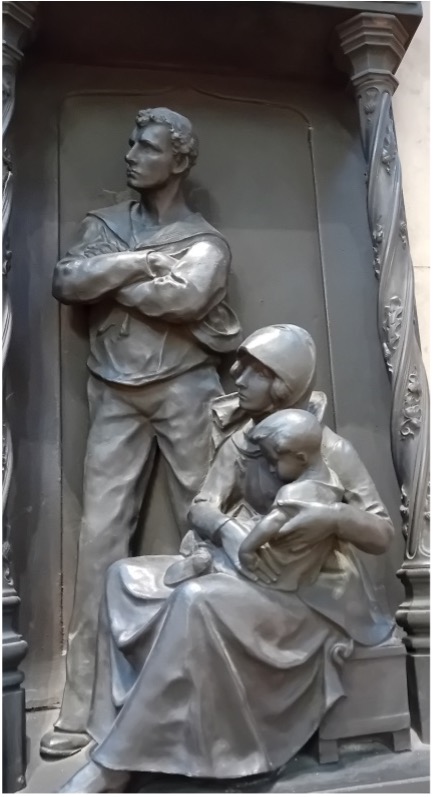
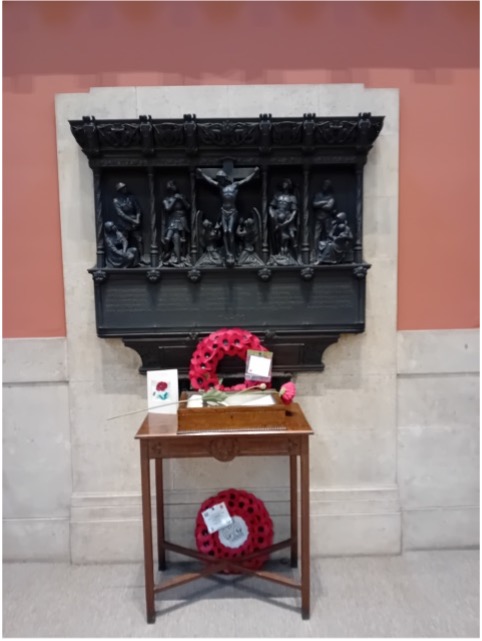
Jesmond United Reformed Church (formerly Jesmond Presbyterian Church) was built in 1888 to a grand Victorian neo-Gothic design by the architect W. L. Newcombe. Over the ensuing years a number of beautiful and significant features were added to the church, including the organ by T. C. Lewis (1893), the very fine war memorial by Walter Gilbert (1920), and stained glass windows by Kempe and Co. (1904), John Henry Dearle of Morris and Co. (1921) and Herbert Hendrie (1933).
In the early 2000s discussions began to take place about refurbishment of the building. As with many projects of this kind, the first steps were tentative, and progress was initially slow. It was not until 2014 that final plans came to fruition, grants and other sources of funding were secured, all permissions were gained, and work started on transforming the building. The scheme involved the creation of a new entrance and foyer, removal of pews, re-decoration, stone-cleaning, new heating and lighting, and carpeting. Once the work started, it moved very quickly, and by early 2015 the building was transformed from an austere, dark and somewhat foreboding edifice to a beautiful, light, warm space for worship and many other events.
In fact we underestimated the effect of the refurbishment! Not until the work was complete did we realise that something very special had been created – a calm, tranquil space with a spiritual quality noticed by many people, a space where music of all kinds would resound, a place into which we love to welcome members of our community for worship, community activities, concerts, meals and friendship.
The Tyneside Scottish and Jesmond URC
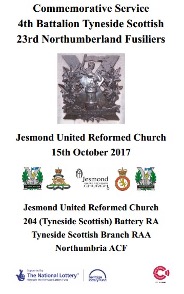
Jesmond URC is privileged to be the Curator of the Colour of the Tyneside Scottish (4th Battalion) and is believed to be the only non-conformist church in England to hold this honour.
The Colour was laid up in the church in 1920 and was restored in 2017 as part of the church’s commemorations of the First World War. A grant from the National Heritage Lottery Fund also enabled the restoration of the church’s Memorial Book, and funded a programme of events which included talks, exhibitions and interaction with local schools. We are very pleased to maintain our links with the Tyneside Scottish, who hold a Remembrance Ceremony in the church on Remembrance Saturday each year.
There is also a fine bronze war memorial in the church, by Walter Gilbert, which has some unique features.
Further information about the men and women from the church who served in the World Wars can be found here.